Volunteer: how to help keep this guide accurate
This page sets out the ways to help the guide stay accurate, and the routes that exist for a concern about a studio or a licensed practitioner. Each one can be used now, without waiting on anyone.
Helping a page stay accurate
This guide does not publish an address for messages and does not take them yet, and the site has no form to receive one. The ways to help below need no message at all.
- Check any figure against its source. Each page names the source beside a figure. Open that source and read the sentence around the number, because a figure lifted out of its context can mislead.
- Ask a studio directly before you book. Ask about its license, how its set-up is cleaned and what it quotes for your piece. A studio can answer those questions for itself, which this guide cannot do for any studio.
- Take a concern about a licensed practitioner or a studio's hygiene to the state. New Hampshire regulates tattooing under RSA Chapter 314-A, Body Art, which requires a license to tattoo (314-A:2). The office that handles licensing under it is the Office of Professional Licensure and Certification. Write down what you saw or were told, with the studio's name and the date.
Nobody is recruited, paid or given a title for this work, and nobody writes for the site on anyone's behalf.
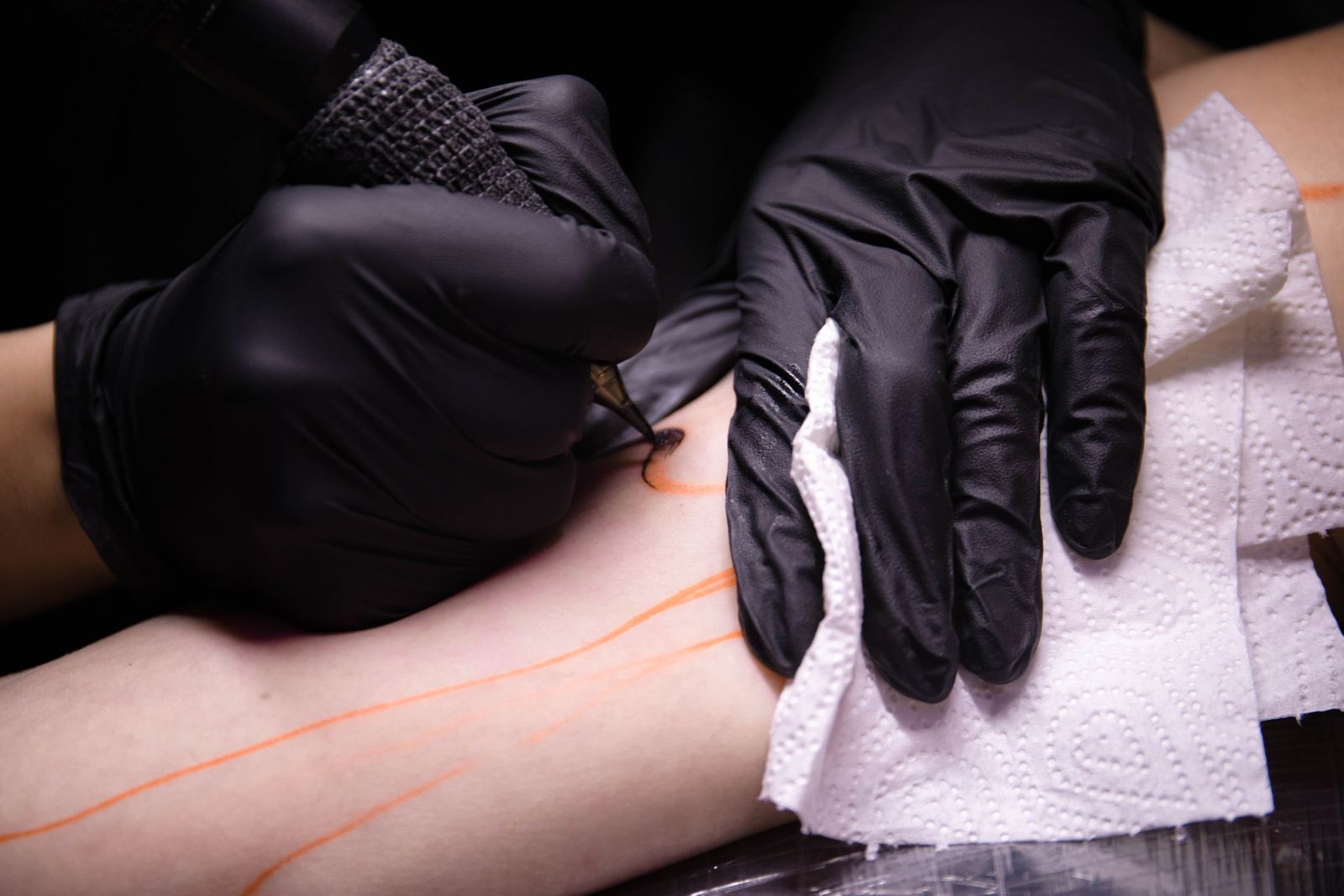
What a tattoo session looks like in a working studio
Checking a figure against its source
Start with the page and find the figure, and the source named beside it. Read the sentence the figure sits in, then the part of the source that states it.
Put the sentence from the page beside the passage in the source. If they disagree, note the words that differ and the place in the source where it says otherwise.

Last, decide where the question belongs. A question about a particular studio goes to the studio, asked before you book. A concern about a licensed practitioner or a studio's hygiene goes to the state route set out above.

Which concern goes where
| Kind of concern | What to check first | Where it goes |
|---|---|---|
| A figure or sentence on a page | The page, the sentence as written and the source named beside the figure | Check that source yourself, since a page changes only when its source supports the change |
| A licensed practitioner or a studio's hygiene | What you saw or were told, with the studio's name and the date | The state route under RSA Chapter 314-A, through the Office of Professional Licensure and Certification |
| Booking a particular studio | Your questions on license, set-up and the quote | The studio itself, asked before you book |
| A question the guide has not answered | The question and the decision it affects | The style helper on the resources page, or the community FAQ |
| The table lists routes that exist. None of them is a promise of a reply, and a page changes only when its source supports the change. | ||
What a question should leave out
Rankings of shops
The guide does not rank shops or list them by town, so a request for a ranking is not something it can answer.
Medical history
Describe the placement, the design and how the skin healed. The guide is not a clinician, so a condition belongs with a doctor.
Prices stated as fact
Give the quote you were given, with the studio and the date, rather than a figure you think is typical.
Claims you cannot support
If the only support is that someone told you, say so. This guide treats it as a report, not a fact.