Gallery: what to check in finished tattoo work
Three pictures, each with what the eye should check. Two are AI-generated renders and one is a stock photograph, so none is a studio's own portfolio.
Three pictures read for what they show
This gallery is deliberately small. Each of its three images is there for one detail a reader can check without knowing who made the work. None is presented as the work of a studio, an artist or a customer, and this page claims no tattoo as its own.
The aim is a habit rather than a verdict. A photograph cannot show how a tattoo will heal or how skilled its artist is, but it can show whether lines are steady, shading is built up evenly, edges are clean and the design sits well on the body. Those are the things to look at first.
Preparation shows before the needle
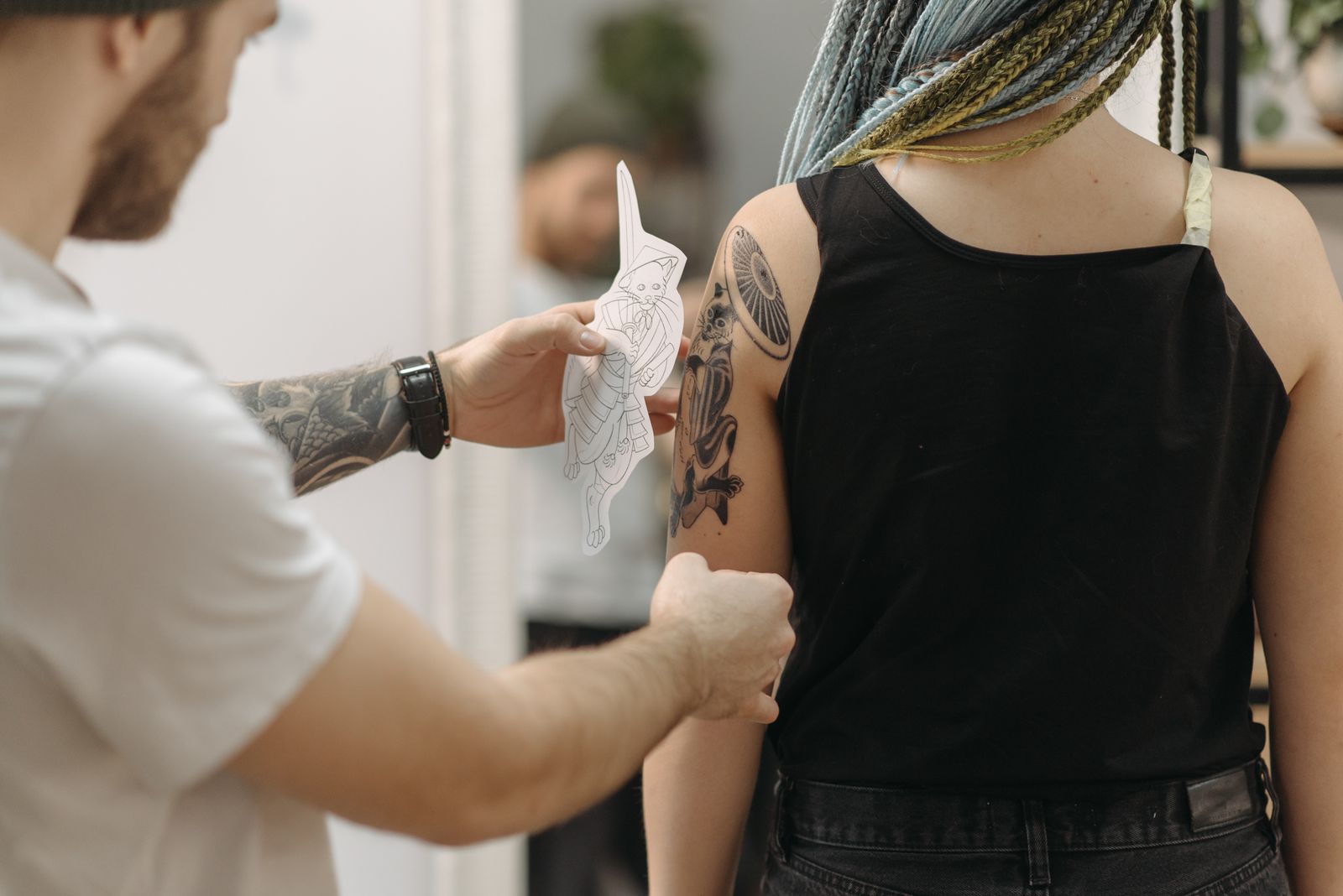
The first picture is a stock photograph of a stencil placed on an upper arm. Placement is settled at this stage, so look at how the stencil follows the curve of the body, not only the design on it. A stencil laid flat over a curve can distort the drawing.
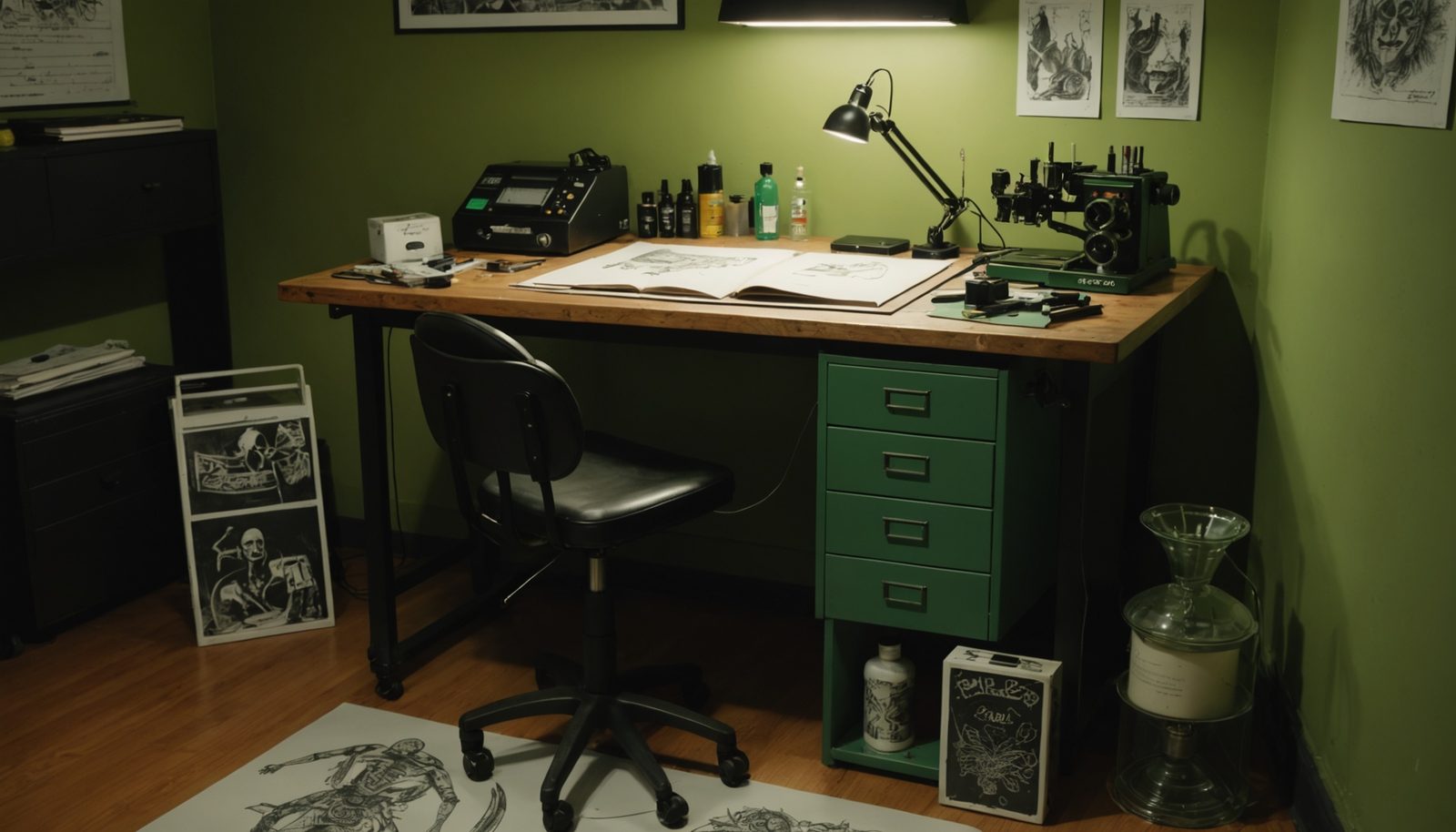
The second picture is an AI-generated render of a sketch desk, not a real studio, and it shows the order of work. The design is drawn and checked on tracing paper before anything touches skin. Any artist can be asked to show the drawing they will work from.
Neither picture says how a particular artist works. Together they show what careful preparation looks like in general, which gives a reader a starting point for questions.
We read a picture of tattoo work for its lines, its edges and its placement, and we give the lighting and the mood very little weight.
How each picture earned its place
Stock and labelled as stock
The first picture is a stock photograph and the other two are AI renders. Each caption says which, so no reader mistakes a render for a real studio's work.
Picked for one checkable detail
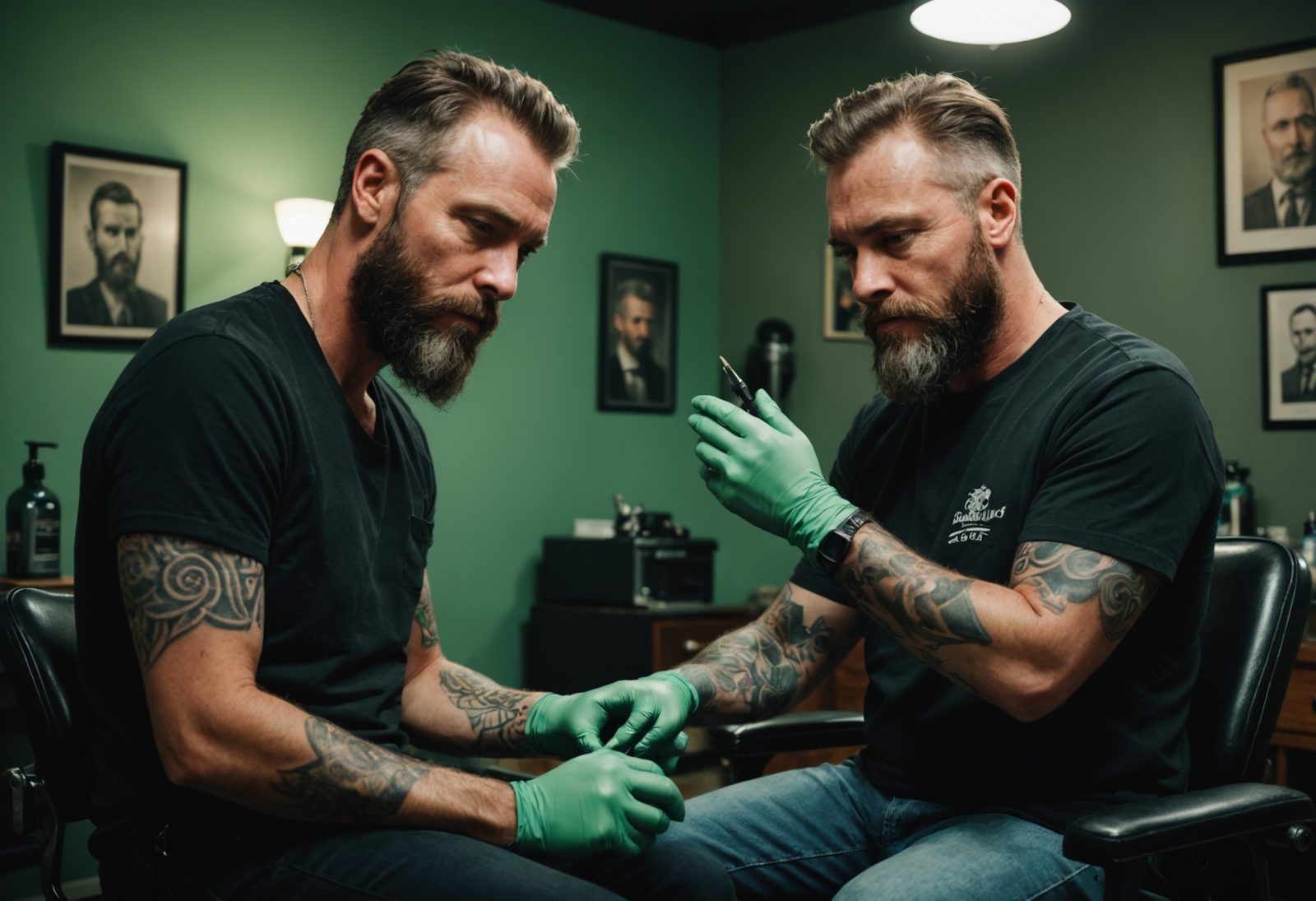
Each picture was kept because a reader can point to one thing in it: where a stencil sits, how a drawing is prepared, or how a line is laid on skin.
No verdict on healing
Nothing here says a tattoo healed well, because a single picture of fresh or in-progress work cannot show that. Healed work is the thing to ask an artist to show.
What was left out
Pictures that could pass for a particular shop's portfolio, or for a customer's testimonial, were not included. This page claims no tattoo work of its own.
Comparing the three in one read
Side by side, the three do different jobs. The stock photograph is about preparation, the sketch desk is about the drawing that comes first, and the third render is about how a line is laid on skin. For the question of which artist to trust, the resources page sets out what to ask.